Nutrition for Beginners: The Only 3 Rules That Actually Matter
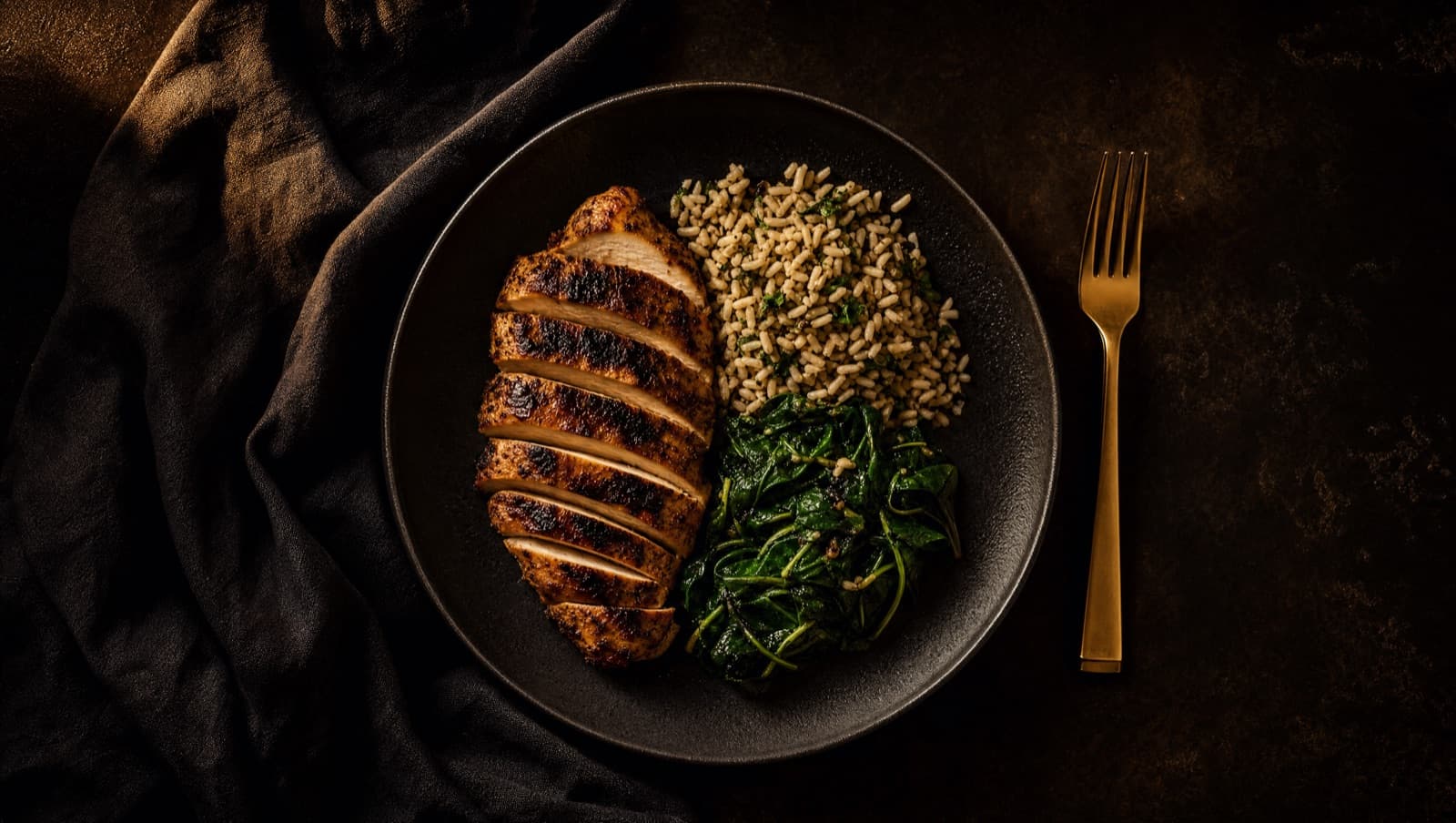
Forget superfoods. Forget meal timing. Forget supplements. Here are the 3 things that move the needle.
Every fitness beginner goes through the same cycle. You decide to "eat healthy." You Google "best diet for fitness." You get 47 million results telling you 47 million different things.
Keto. Paleo. Carnivore. Vegan. Intermittent fasting. Carb cycling. Reverse dieting. Nutrient timing. Anabolic windows.
You haven't even started and you're already overwhelmed.
Here's what I want you to understand: 90% of your nutrition results come from 3 fundamentals. Everything else (every supplement, every timing protocol, every superfood list) lives in the remaining 10%.
And that 10% is completely irrelevant if you're not nailing the 3 fundamentals first.
Let me save you two years of confusion.
Rule 1: Eat Enough Protein (0.7-1g Per Pound of Bodyweight)
If you take one thing from this entire article, take this.
Protein is the single most important macronutrient for body composition. Whether your goal is building muscle, losing fat, or both, protein is the foundation everything else sits on.
Here's why protein matters so much:
It builds and repairs muscle tissue. When you lift weights, you create microscopic tears in your muscle fibers. Protein provides the amino acids that repair those fibers and make them stronger. Without adequate protein, your training is largely wasted effort.
It keeps you full. Protein is the most satiating macronutrient. A meal with 40 grams of protein will keep you full dramatically longer than a meal with 40 grams of carbs. This means fewer cravings, less snacking, and an easier time sticking to your calorie targets.
It has a high thermic effect. Your body burns approximately 20-30% of protein's calories just digesting it. For carbs, it's around 5-10%. For fat, about 0-3%. So 100 calories of protein costs your body 20-30 calories to process. Free calorie burn.
How much do you need? Aim for 0.7-1 gram per pound of bodyweight. If you weigh 170 pounds, that's 119-170 grams per day.
That might sound like a lot. It probably is a lot more than you're currently eating. Most people, when they first track their protein, discover they're eating about half of what they need.
Practical ways to hit your protein target:
- Add a protein source to every meal (chicken, fish, eggs, Greek yogurt, tofu, legumes)
- Have a protein shake as a snack (whey, casein, or plant-based, whichever you prefer)
- Swap low-protein snacks for high-protein alternatives (Greek yogurt instead of regular yogurt, cottage cheese instead of crackers)
- Front-load your protein. Try to get 30-40g at breakfast, and the rest of the day gets easier.
Don't try to go from 60g to 170g overnight. Add 20-30g per week until you hit your target. Your digestive system will thank you.
Rule 2: Eat Mostly Whole Foods (The 80/20 Approach)
This is where people overcomplicate things.
You don't need to eat "clean." You don't need to eliminate food groups. You don't need to buy organic everything. You don't need to swear off sugar, gluten, dairy, or fun.
You need to eat mostly whole foods. Mostly.
What's a whole food? Something that doesn't have a long ingredient list. Something that grew out of the ground, walked on it, swam in water, or came from something that did. Fruits, vegetables, lean meats, fish, eggs, rice, potatoes, oats, nuts, seeds, legumes.
The 80/20 approach means roughly 80% of your food comes from these whole, minimally processed sources. The other 20% is whatever you want.
Yes. Whatever you want.
A slice of pizza. Some ice cream. A burger from your favorite restaurant. A beer on Friday.
Why does this work? Two reasons:
First, whole foods are naturally more filling per calorie. It's very hard to overeat chicken, rice, and vegetables. It's very easy to overeat chips, cookies, and fast food. By making whole foods your default, you naturally regulate your calorie intake without obsessive tracking.
Second, the 20% prevents the binge-restrict cycle. When you tell yourself "I can never eat pizza again," pizza becomes the only thing you think about. When you tell yourself "I can have pizza on Friday," pizza becomes just... pizza. No guilt. No binge. No shame spiral. Just a normal meal that fits into an overall healthy pattern.
The 80/20 approach isn't a diet. It's a sustainable relationship with food. And sustainability is the only thing that produces long-term results.
For a deeper dive into building sustainable tracking habits, check out our 80/20 tracking method guide.
Hit your protein. Match your calories. Skip the spreadsheet.
Anchor meals + adaptive targets that move with your week. First plan in 4 minutes.
Build my nutrition planRule 3: Match Calories to Your Goal
This is the part most beginners resist. They want to believe that food quality alone determines results. That if they eat "clean enough," the weight will fall off and the muscle will appear.
It won't.
Calories determine your direction. Surplus to gain, deficit to lose, maintenance to recomp.
Here's the simple framework:
Want to lose fat? Eat fewer calories than you burn. A deficit of 300-500 calories per day is sustainable and effective. That's about 0.5-1 pound of fat loss per week.
Want to build muscle? Eat slightly more calories than you burn. A surplus of 200-300 calories per day is enough. More than that just adds unnecessary fat.
Want to do both simultaneously? Eat at maintenance or a slight deficit (100-300 calories below). This is body recomposition, and it works exceptionally well for beginners. We have a complete guide to body recomposition if this is your goal.
How to find your maintenance calories:
The simplest method: multiply your bodyweight (in pounds) by 14-16. If you're moderately active, use 15.
- 150 lbs x 15 = 2,250 calories (estimated maintenance)
- 180 lbs x 15 = 2,700 calories (estimated maintenance)
- 200 lbs x 15 = 3,000 calories (estimated maintenance)
This is a starting point, not gospel. Track your weight for 2 weeks at this intake. If your weight stays stable, you've found your maintenance. If it goes up, your maintenance is lower. If it goes down, it's higher. Adjust by 200 calories and recheck.
Important: the multiplier is just an estimate. Your actual TDEE depends on your activity level, muscle mass, age, hormones, and genetics. The 2-week tracking method gives you real data instead of a formula's best guess.
Why Beginners Should NOT Track Everything
Here's where I'm going to say something that goes against most fitness advice.
If you're just starting out, do NOT try to track all your macros from day one.
Tracking protein, carbs, fat, fiber, calories, micronutrients, meal timing, and water intake simultaneously is a recipe for burnout. You'll spend more time logging food than eating it. You'll feel like a failure every day you miss a target. And you'll quit within a month.
Instead, use The Single-Metric Start:
Weeks 1-2: Track protein only. That's it. Don't worry about total calories, carbs, or fat. Just make sure you're hitting 0.7-1g of protein per pound of bodyweight. This single habit, executed consistently, does more for your body composition than any supplement stack or fancy diet protocol.
Weeks 3-4: Add calorie awareness. Now that protein is a habit, start paying attention to total calories. You don't even need to track precisely. Just get a rough sense of whether you're above or below your target.
Month 2+: Full tracking (if you want to). By now, tracking is a habit, not a chore. You can add carb and fat targets if your goals require that level of precision. But for most people, protein + total calories is enough forever.
This progressive approach respects a fundamental truth about human behavior: we can build one habit at a time much more reliably than five habits at once.
How AI Simplifies the Math
Let's be honest. Even with the simplified 3-rule approach, nutrition involves math. And math at every meal is exhausting.
This is where AI coaching earns its keep.
Smart food logging. Instead of searching a database for "grilled chicken breast, 6 oz, no skin" and hoping you picked the right entry, AI can identify foods from a photo or a simple text description. "Had a chicken stir fry with rice" becomes a macro estimate in seconds, not minutes.
Automatic adjustments. Remember Rule 3, match calories to your goal? AI tracks your weekly averages and adjusts your targets based on actual results. No more guessing whether your multiplier was right. The data tells the truth, and the AI responds.
Pattern recognition. AI notices things you don't. Like the fact that you consistently under-eat protein on weekends. Or that your calorie intake spikes every Thursday (maybe that's your office's catering day). These patterns, once identified, are easy to address. But most people never notice them on their own.
Progressive complexity. A good AI system starts you with protein tracking only (just like The Single-Metric Start) and gradually introduces more metrics as you build habits. It doesn't dump everything on you at once.
If you're brand new to the gym as well as nutrition, our beginner's guide to the gym covers the training side of the equation with the same keep-it-simple philosophy.
What About Supplements?
Since you're going to ask: here's the hierarchy.
Tier 1 (actually useful for most people):
- Creatine monohydrate (5g daily, well-researched, inexpensive)
- Protein powder (if you struggle to hit protein targets with whole food alone. It's a convenience tool, not magic.)
- Vitamin D (if you don't get regular sun exposure)
Tier 2 (situationally useful):
- Caffeine (pre-workout performance boost; coffee works fine)
- Fish oil (if you don't eat fatty fish regularly)
Tier 3 (marketing, mostly):
- BCAAs (pointless if you eat enough total protein)
- Fat burners (expensive caffeine pills with a cool label)
- Testosterone boosters (they don't work)
- Most "proprietary blends" (underdosed ingredients hidden behind a trademark)
Notice how Tier 1 is three items. And two of them are food and sunshine. Supplements are the last 1% of nutrition. If you're spending money on supplements before nailing the 3 rules above, you're building a house starting with the roof.
The Bottom Line: Keep It Stupid Simple
Here's your entire beginner nutrition strategy on one index card:
- Eat 0.7-1g of protein per pound of bodyweight every day
- Eat 80% whole foods, 20% whatever you want
- Match your calories to your goal (deficit to lose, surplus to gain, maintenance to recomp)
That's it. Master these three. Track protein first, then add calories. Don't worry about carb cycling, nutrient timing, or superfoods until these three are on autopilot.
Everything else is optimization. And optimization only works when the fundamentals are locked in.
If you want to understand how these nutrition rules connect to a proper training program (specifically, the principle of progressive overload) read our guide to progressive overload. Because the best nutrition in the world won't build muscle without the right training stimulus. And the best training stimulus won't build muscle without the right nutrition.
They work together. Always.
Start simple. Stay consistent. Let the results compound. That's the only "secret" that's ever worked.
CreatorClone Team
AI-powered fitness coaching that adapts to you. See how it works →
Hit your protein. Match your calories. Skip the spreadsheet.
Anchor meals + adaptive targets that move with your week. First plan in 4 minutes.
Build my nutrition plan