Nutrition Tracking Without the Obsession: The 80/20 Method

Tracking every gram of chicken breast is not a lifestyle. It's a part-time job.
You know the routine. Pull out your phone. Open the tracking app. Search for "chicken breast, grilled, boneless, skinless." Get 47 results. Pick one. Wonder if it's the right one. Weigh the chicken on your food scale. Log 5.3 ounces. Repeat for the rice. Repeat for the broccoli. Repeat for the olive oil. Repeat for the seasoning.
Congratulations. You've spent 8 minutes logging a single meal.
Now do that three to five times a day. Every day. For the rest of your life.
Nobody does this. Not long-term. Not outside of bodybuilding contest prep. And yet, the fitness industry keeps telling people that obsessive tracking is the only path to results.
It's not. And the data proves it.
The people who sustain nutrition habits for years (the ones who actually maintain their physique) don't track every micro detail. They track the things that matter and let the rest take care of itself.
That's The 80/20 Tracking Protocol.
The Problem With Obsessive Tracking
Let me be clear: tracking is not the problem. Obsessive tracking is the problem.
There's a meaningful difference between "I'm aware of what I eat and roughly how much" and "I can't eat a handful of almonds without weighing them first."
The first is a useful life skill. The second is a precursor to disordered eating.
Here's what obsessive tracking actually costs you:
Time. Detailed food logging takes 20-40 minutes per day. That's 2-5 hours per week. Over a year, you'll spend 100-250 hours (the equivalent of 4-10 full days) logging food. Is that the best use of your time?
Mental energy. Every food decision becomes a math problem. "Can I eat this? How many grams is this? Does it fit my macros? What if I go over?" This decision fatigue compounds throughout the day and bleeds into other areas of your life.
Social friction. Going out to eat becomes stressful. "I can't find this restaurant's food in my app." Eating at a friend's house becomes an interrogation. "What oil did you cook this in? How much butter?" Nobody wants to be that person at the dinner table.
Diminishing returns. Here's the kicker: the difference between tracking 4 metrics precisely and tracking 2 metrics roughly is almost zero for most people's goals. You're spending 3x the effort for maybe a 5% improvement in accuracy. That's a terrible trade.
The 80/20 Tracking Protocol
The Pareto principle applies to nutrition tracking just like it applies to everything else. 20% of the tracking effort produces 80% of the results.
So what's the 20% that matters?
Track protein. This is the single most impactful number for body composition. Hit 0.7-1g per pound of bodyweight daily, and you've covered the most important macro. If you're not sure what that looks like in practice, our nutrition for beginners guide breaks it down.
Track total calories. Not carbs. Not fat. Not fiber. Not sodium. Just total calories. Because whether you gain, lose, or maintain weight comes down to energy balance. Surplus = gain. Deficit = lose. Maintenance = maintain. That's thermodynamics, and tracking total calories keeps you on the right side of it.
That's it. Two numbers. Protein and calories.
"But what about carbs and fat?" They matter, sure. But if you're hitting your protein target and your calorie target, carbs and fat largely sort themselves out. You can't eat 170g of protein and 2,200 total calories while being wildly off on carbs and fat. The math constrains the other macros automatically.
"But what about micronutrients?" Eat mostly whole foods. If 80% of your calories come from fruits, vegetables, lean proteins, whole grains, and healthy fats, your micronutrient bases are covered. No tracking required.
The 80/20 Tracking Protocol cuts your daily tracking time from 30+ minutes to about 5. And it keeps you focused on the two inputs that actually drive results instead of drowning you in data that doesn't move the needle.
The Anchor Meals Concept
This is the companion framework to the 80/20 Protocol, and it's what makes the whole system nearly effortless.
Anchor meals are 2-3 go-to meals you eat most days where you already know the macros.
You don't track these meals in real time anymore. You tracked them once. You know what's in them. Now they're just... meals.
Here's what my anchor meals look like:
Breakfast (same 5 days a week): 3 eggs scrambled, 2 slices of toast, a banana. I know this is roughly 550 calories and 28g protein. I logged it once. Now I just eat it.
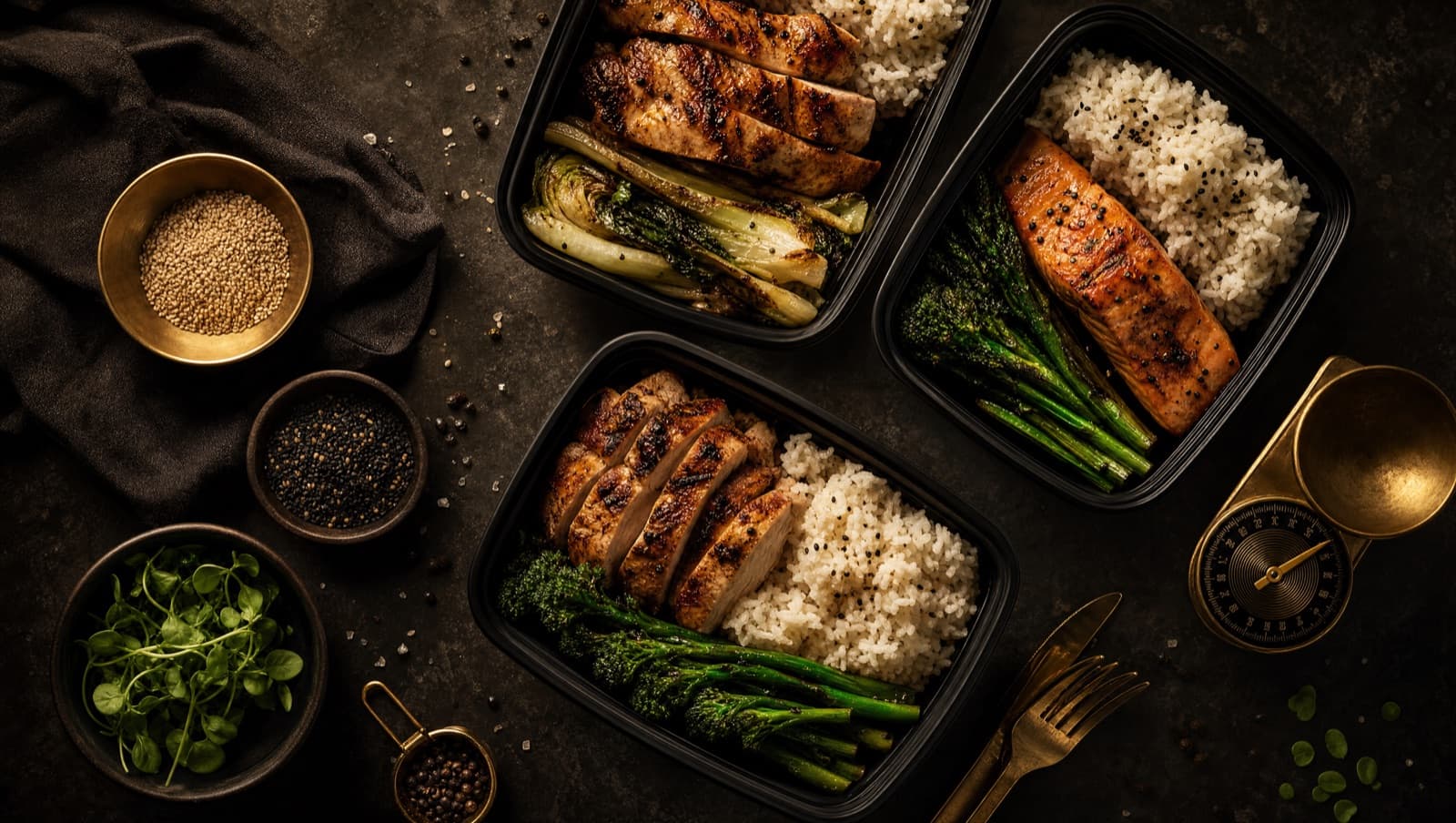
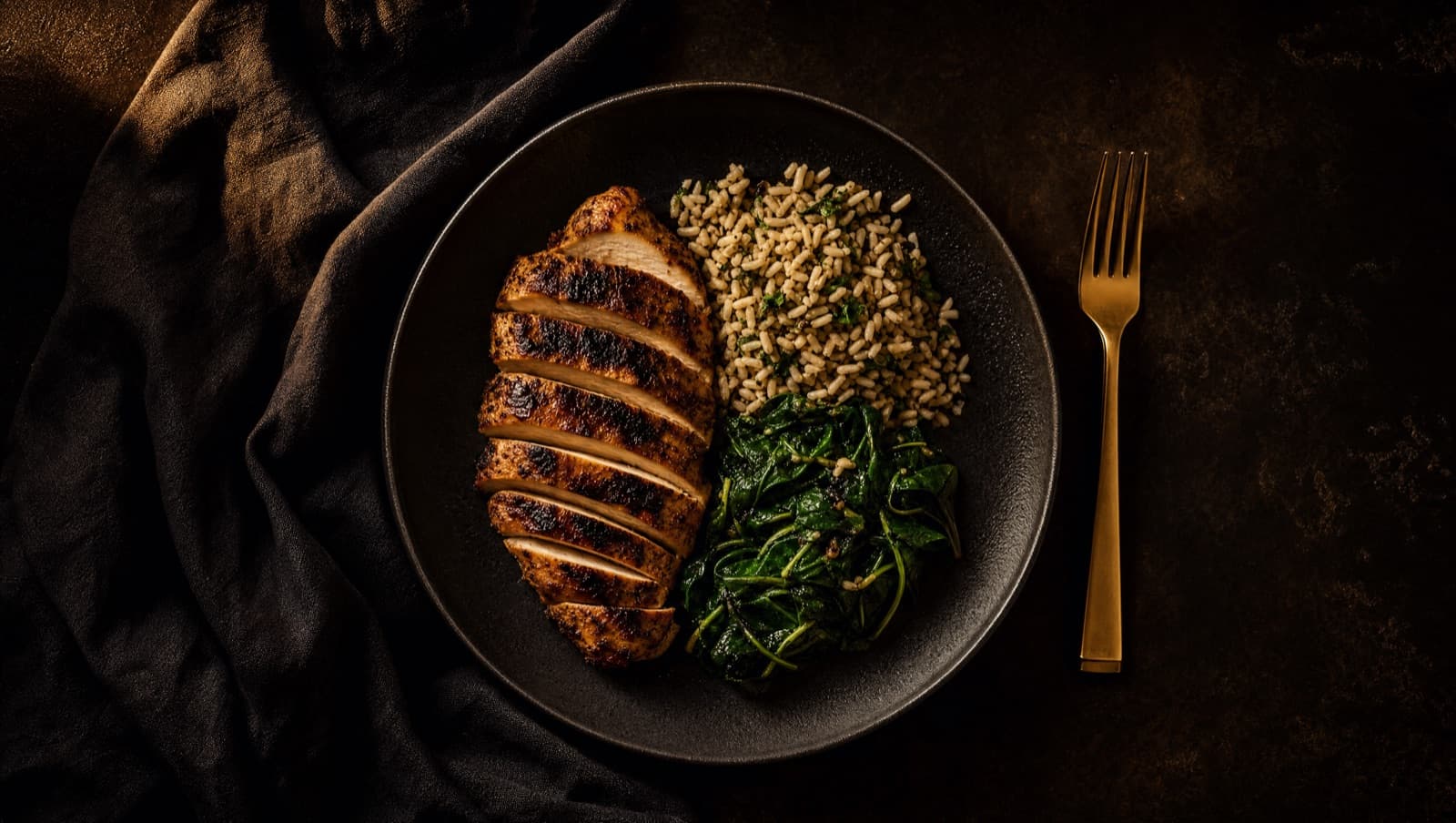
Lunch (rotates between 3 options): Some version of protein + grain + vegetables. Chicken and rice bowl. Turkey sandwich with a side salad. Leftover stir-fry from dinner. All of these land in the 500-650 calorie, 35-45g protein range. Close enough.
Ready to stop guessing and start progressing?
CreatorClone builds your workout and nutrition plan using real coaching methodology — then adapts it every week based on your progress.
See how it worksDinner (the flex meal): This is where variety happens. This is the one I actually track, or at least estimate.
By the time dinner rolls around, I already know I've had about 1,100-1,200 calories and 63-73g of protein from my anchors. My daily target is 2,300 calories and 170g protein. So dinner needs to be roughly 1,100 calories and 100g protein. That gives me a clear target without having tracked a single thing in real time all day.
The Anchor Meals concept reduces tracking to one meal per day. And even that one meal only needs rough estimation, because your anchors have already done the heavy lifting.
This integrates perfectly with the Anchor Meal Strategy we describe in our AI meal planning guide.
How AI Learns Your Patterns and Reduces Tracking Burden
This is where technology changes the game.
Traditional calorie counting apps treat every day as a blank slate. You log from scratch. Every meal. Every ingredient. Every time.
AI-powered tracking works fundamentally differently.
Pattern recognition. After two weeks of logging, the AI notices your patterns. "You eat eggs and toast for breakfast most weekdays." "Your lunch is usually a chicken-based meal around 500-600 calories." "You eat out on Friday evenings."
Once the AI has your patterns, it can pre-populate your log. Open the app at 8am on a Tuesday? It already has your breakfast filled in. You confirm with one tap instead of logging every ingredient.
Meal memory. Logged a specific homemade meal once? The AI remembers the full breakdown. Next time you eat it, one tap. No re-logging ingredients. No re-measuring portions.
Smart estimation. Don't know the exact macros for your dinner? Describe it in plain language. "Grilled salmon with roasted vegetables and a small portion of rice." The AI estimates macros based on typical serving sizes and preparation methods. Is it perfectly accurate? No. Is it accurate enough to keep you within your targets? Yes.
Weekly reconciliation. Instead of obsessing over daily precision, the AI tracks your weekly rolling averages. Had a high day? The AI adjusts the rest of the week slightly. Had a low day? Same thing, opposite direction. This prevents the "I blew my macros today so the whole week is ruined" mentality that kills consistency.
Progressive simplification. This is the key feature. Over time, as the AI learns your patterns, your daily tracking effort should go DOWN, not up. Month 1 might require 10 minutes of tracking per day. Month 3 might require 3 minutes. Month 6 might require 30 seconds, just confirming the AI's predictions and adjusting one meal.
That's the goal: a tracking system that eventually tracks itself.
The Spectrum of Tracking Intensity
Not everyone needs the same level of tracking. Here's a framework for matching your tracking intensity to your actual goals:
Level 1: Awareness Only (no logging)
- Best for: Maintaining a physique you're happy with
- What you do: Eat mostly whole foods, include protein at every meal, pay general attention to portion sizes
- Who this works for: People who've already built good habits and are in maintenance mode
Level 2: The 80/20 Protocol (protein + calories)
- Best for: Losing fat, building muscle, or recomping
- What you do: Track daily protein and total calories. Use anchor meals. Estimate the rest.
- Who this works for: Most people with body composition goals. This is the sweet spot.
Level 3: Full Macro Tracking
- Best for: Competitive athletes, bodybuilders in prep, people with very specific physique goals
- What you do: Track protein, carbs, fat, and total calories with precision
- Who this works for: Less than 10% of the fitness population. And even they don't need to do it year-round.
Most people reading this should be at Level 2. If you're at Level 3 and you're not competing in something, you're probably over-tracking.
And if you're at Level 1 but not seeing results, stepping up to Level 2 usually provides the clarity and accountability needed to start making progress.
When to Track More (and When to Track Less)
Tracking intensity should ebb and flow with your goals and life stage.
Track more when:
- You're starting a new fat loss or muscle building phase
- You've been stuck for 4+ weeks and need to identify the problem
- You're learning portion sizes (the educational phase, usually lasts 2-3 months)
- You're working toward body recomposition and the margins are tighter
Track less when:
- You're in a maintenance phase
- Your habits are solid and your results are consistent
- Tracking is causing stress, anxiety, or obsessive behavior
- You've been tracking for 6+ months and have a good intuitive sense of portions
The ability to scale tracking up and down based on context is a sign of a healthy relationship with food. If you feel like you CAN'T stop tracking without everything falling apart, that's a signal to step back and work on building intuitive eating skills.
Building Intuitive Eating Skills (Without Losing Progress)
The ultimate goal of tracking isn't to track forever. It's to build an internal model of nutrition that's accurate enough to self-regulate.
Think of tracking like training wheels on a bike. Essential for learning. Counterproductive if you never take them off.
Here's how to develop nutritional intuition:
Practice the "plate method." Before logging a meal, estimate its macros in your head. Then log it and compare. Over time, your estimates get more accurate. Eventually, you don't need to verify.
Learn to eyeball portions. A palm-sized portion of protein is roughly 4 oz. A fist of carbs is roughly one cup. A thumb of fat is roughly one tablespoon. These aren't perfect measurements. They don't need to be. They need to be close enough, consistently.
Check in periodically. Even after you stop daily tracking, do a random "audit day" once or twice a month. Track everything for one day and compare it to your mental estimates. If you're way off, recalibrate. If you're close, keep riding without training wheels.
Let the AI validate. This is where AI shines in the post-tracking phase. Use quick photo logging or voice descriptions to check your intuition. "I think that was about 600 calories and 40g protein." The AI confirms or corrects. Over time, you're calibrating your internal model with data-backed feedback.
The Bottom Line
Nutrition tracking is a tool. Like any tool, it should be used with purpose and put away when the job is done.
The 80/20 Tracking Protocol keeps you focused on what drives results (protein and total calories) without drowning you in data that adds effort without adding outcomes.
Anchor meals reduce your daily tracking to one meal by giving you a known-quantity foundation.
AI-powered tracking learns your patterns and progressively reduces the effort required until tracking barely feels like tracking.
And the endgame, the real goal, is building the nutritional intuition to eat well without a spreadsheet. Not because tracking is bad, but because freedom from tracking, while maintaining results, is the marker of someone who truly understands their nutrition.
Track smarter, not harder. Hit your protein. Hit your calories. Let the rest flex. And spend the 25 minutes you just saved doing literally anything else.
CreatorClone Team
AI-powered fitness coaching that adapts to you. See how it works →
Ready to stop guessing and start progressing?
CreatorClone builds your workout and nutrition plan using real coaching methodology — then adapts it every week based on your progress.
See how it works