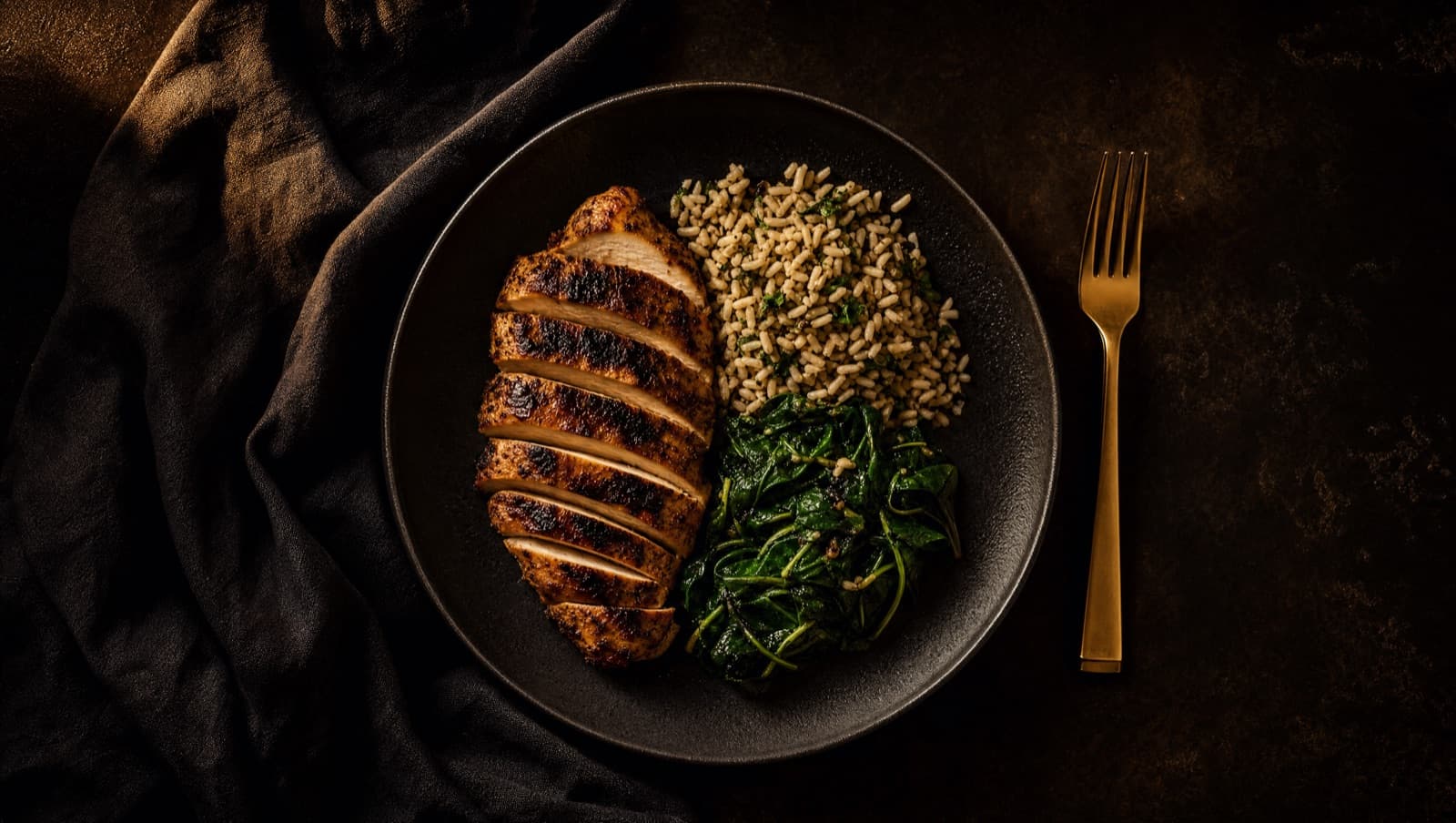
AI Meal Planning: How to Hit Your Macros Without Meal Prepping for 4 Hours
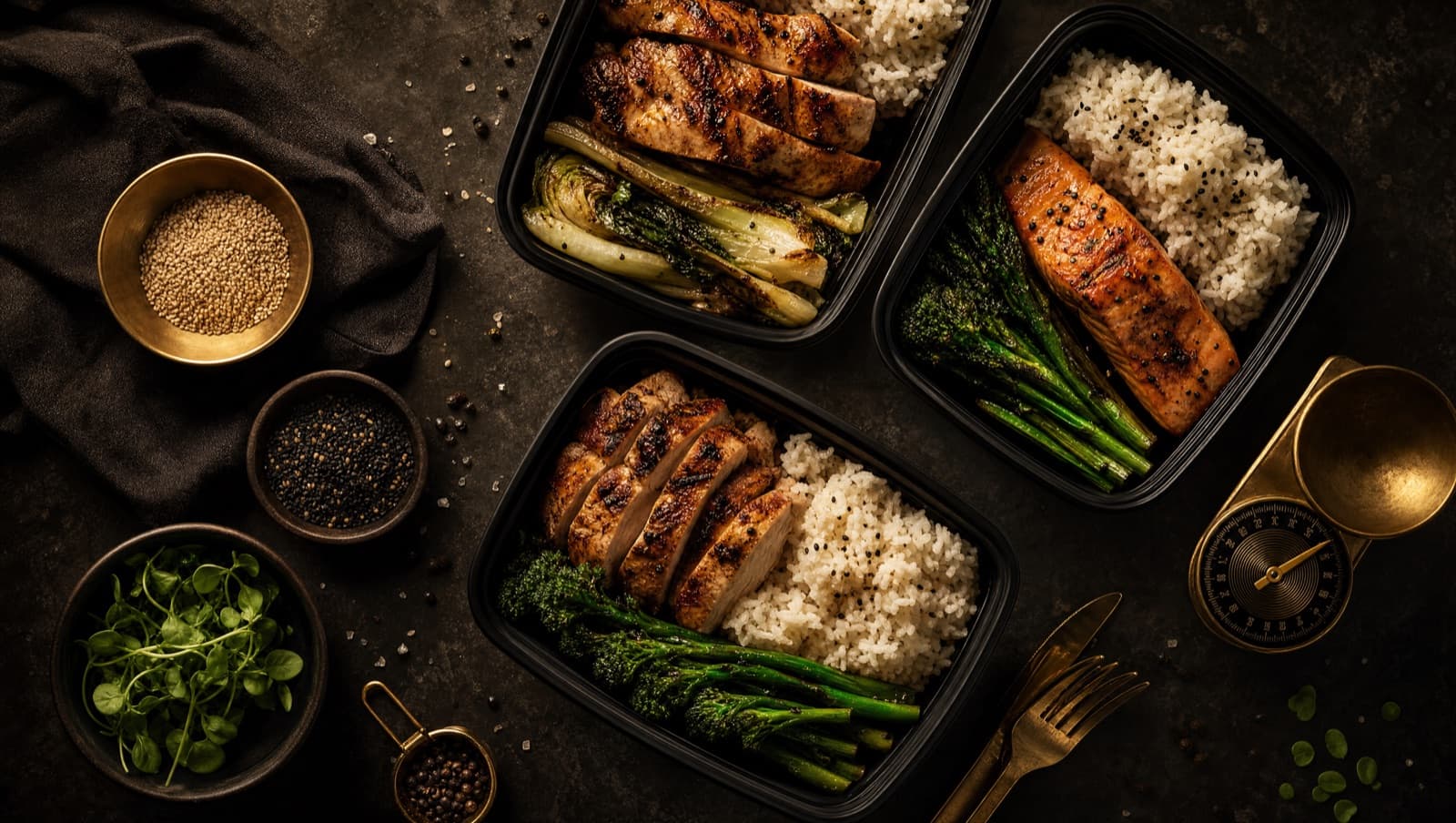
If your meal plan requires you to become a part-time chef, you won't follow it. Period.
I don't care how perfectly balanced your macros are on a spreadsheet. I don't care that your coach spent three hours designing it. If the plan requires you to cook 14 different meals on Sunday, weigh every ingredient to the gram, and eat cold chicken out of Tupperware at your desk, you will quit.
Not because you lack discipline. Because the plan lacks intelligence.
The best meal plan isn't the most nutritionally perfect one. It's the one you'll actually follow. And that requires a fundamentally different approach to how meal plans are built.
The Compliance-First Framework
Traditional meal planning works backwards. It starts with the macros, picks foods that hit the numbers, arranges them into meals, and hands you a PDF.
Then reality hits. You don't like tilapia. You don't have time to cook lunch. Your family doesn't eat the same things you do. The plan dies in 4-7 days.
The Compliance-First Framework flips the entire process:
Step 1: Start with what you already eat. Before calculating a single macro, the AI needs to know what foods you actually enjoy, what you typically eat for each meal, and what your schedule looks like. Because a meal plan built around your existing preferences has a 10x better chance of survival than one that requires a complete lifestyle overhaul.
Step 2: Adjust, don't overhaul. Instead of replacing your entire diet, the AI identifies the minimum changes needed to hit your targets. Maybe you're already close on carbs and fat, but your protein is 50 grams short. The fix might be as simple as adding a protein shake after your workout and switching your afternoon snack from chips to Greek yogurt.
Step 3: Build in flexibility. Rigid plans break. Flexible plans bend. The AI creates ranges, not rigid numbers. It gives you swap options for every meal. It accounts for the fact that Wednesday is different from Saturday.
This isn't laziness. It's engineering for the real variable that determines results: consistency over time.
The Anchor Meal Strategy
Here's a framework that eliminates 80% of the decision fatigue around food.
The Anchor Meal Strategy is simple: nail 2 meals, let the third flex.
Pick two meals (typically breakfast and one other) where you eat roughly the same thing most days. These are your anchor meals. You know the macros. You know the prep time. You could make them in your sleep.
Your third meal is your flex meal. This is where variety lives. Where social eating happens. Where you enjoy food without a calculator.
Why does this work?
Decision fatigue is the silent killer of nutrition plans. Every time you have to decide what to eat, weigh whether it "fits your macros," and figure out how to prepare it, you're spending willpower. And willpower is a finite resource.
Anchor meals eliminate 2 out of 3 daily food decisions. That's not a small thing. That's the difference between someone who tracks for 2 weeks and someone who tracks for 2 years.
Here's what this looks like in practice:
- Breakfast anchor: Greek yogurt with berries and granola. Same thing, Monday through Friday. You know it's roughly 400 calories and 35g protein. Done.
- Lunch anchor: A big salad with grilled chicken and olive oil dressing. Maybe you meal prep the chicken on Sunday. 500 calories, 45g protein. Done.
- Dinner flex: This is where you eat with your family. Go to a restaurant. Try a new recipe. The AI adjusts your targets based on what your anchor meals already covered.
The AI does the math on your flex meal for you. If your anchors already hit 80g of protein, it tells you that dinner needs roughly 60-80g more. Simple. No spreadsheet. No agonizing.
If you're new to thinking about nutrition this way, our nutrition for beginners guide breaks down the fundamentals even further.
Macro Cycling vs. Static Macros: Which Actually Matters?
You've probably heard about macro cycling: eating different amounts of carbs (and sometimes fat) on different days. More carbs on training days, fewer on rest days. Sounds scientific. Sounds optimized.
Here's the truth: for most people, macro cycling adds complexity without adding results.
The research on carb cycling shows modest benefits for competitive athletes who are already lean and training at high volumes. For someone trying to lose 20 pounds or build their first 10 pounds of muscle? The difference between static macros and cycled macros is negligible.
Hit your macros without prepping for four hours on Sunday.
Anchor meals + flex meal + AI-adjusted targets. First plan in 4 minutes.
Build my meal planWhat DOES matter is your weekly average. If you eat 2,200 calories Monday through Thursday and 3,000 on Friday and Saturday, your weekly average is the number that determines your results. Not any individual day.
This is where AI planning actually shines. Instead of giving you the same rigid targets every day, the AI can:
- Automatically adjust for training days vs. rest days (slightly more food when you train)
- Account for social events you've flagged (bigger dinner Saturday? Smaller lunch to compensate)
- Track your weekly rolling average and course-correct before small daily variations compound into real problems
It's not macro cycling in the traditional sense. It's adaptive daily targeting, and it's far more practical.
Why Adaptive Plans Crush Rigid 12-Week Plans
Let me paint a picture you've probably lived.
Week 1 of a new meal plan. You're motivated. You bought all the groceries. You cooked all the meals. You hit your macros perfectly. You feel unstoppable.
Week 3. You're tired of eating the same chicken and rice. You skipped meal prep on Sunday because you had plans. You "winged it" for two days and have no idea what your macros were.
Week 5. The plan is sitting in a drawer. You're back to eating whatever. You feel guilty. You tell yourself you'll "start fresh on Monday."
This is a plan design problem, not a discipline problem.
Rigid plans fail because they can't adapt to the single most unpredictable variable: your life. A 12-week meal plan assumes your schedule, preferences, energy levels, and social calendar will remain constant for 84 consecutive days. That's absurd.
Adaptive AI plans work differently:
They learn your patterns. After two weeks of tracking, the AI knows that you consistently under-eat protein at breakfast and over-eat carbs at dinner. It adjusts your recommendations accordingly, not by lecturing you, but by building meals that account for your natural tendencies.
They respond to feedback. Didn't like a meal? Flag it. The AI removes it and suggests alternatives with similar macros. Over time, your meal suggestions get better because the system is learning what you actually want to eat.
They adjust to your results. Losing weight too fast? The AI bumps calories up slightly to preserve muscle. Weight stalled for two weeks? A small adjustment down. This is what a good human nutrition coach does, except the AI can do it daily instead of at your monthly check-in.
If you're working toward body recomposition specifically, these daily adjustments become even more important. Check out our body recomposition guide to understand why precision matters so much when you're trying to build muscle and lose fat simultaneously.
The Protein Priority System
When people ask me "what's the one thing I should track if I'm going to track anything," the answer is always the same.
Protein.
Not calories. Not carbs. Not fat. Protein.
Here's why. If you hit your protein target every day and eat mostly whole foods, everything else tends to fall into place. Protein is satiating; it keeps you full. It has a high thermic effect; your body burns more calories processing it. And it's the building block for muscle.
The Protein Priority System works like this:
- Set your protein target: 0.7-1g per pound of bodyweight
- Build every meal around a protein source first: Pick your protein, then add everything else around it
- Track only protein for the first 2 weeks: Don't worry about total calories, carbs, or fat yet. Just hit your protein number.
This is how AI meal planning should onboard new users. Not by dumping 4 macro targets on someone who's never tracked anything. Start with protein. Get that habit locked in. Then layer on additional tracking when the person is ready.
It's the same principle behind our 80/20 tracking method: track the 20% of inputs that drive 80% of results.
What to Look for in an AI Meal Planning Tool
Not all AI meal planners are created equal. Most of them are just glorified calorie calculators with a recipe database bolted on. Here's what actually matters:
Personalization depth. Does it ask about your food preferences, cooking skills, time constraints, and budget? Or does it just ask for your macros and spit out generic meals?
Swap flexibility. Can you swap individual meals without blowing up your entire day's macros? A good AI planner recalculates everything in real time when you make a change.
Learning capability. Does the system get better over time? Does it remember that you flagged salmon as a dislike three weeks ago? Does it notice that you consistently skip breakfast on weekdays?
Integration with training. Your nutrition should talk to your training program. Training days and rest days have different needs. A leg day burns more than an arm day. The best systems account for this automatically.
Sustainability focus. Does it build plans you can maintain for months, or does it optimize for a perfect week you'll never repeat? The best indicator: does it include foods you actually enjoy, or does it feel like a punishment?
Making It Work: The First 30 Days
Here's your action plan if you want to start using AI-powered meal planning effectively.
Days 1-7: Audit. Track what you normally eat for one week. Don't change anything. Just track. This gives the AI (and you) a baseline of your actual eating patterns, not the idealized version in your head.
Days 8-14: Protein focus. Set your protein target and start building meals around it. Use the Anchor Meal Strategy: lock in 2 meals, flex the third. Don't obsess over total calories yet.
Days 15-21: Full macro tracking. Now layer in total calorie awareness. The AI should be adjusting your targets based on your first two weeks of data. This is where the adaptive magic starts.
Days 22-30: Refine and automate. By now the AI knows your preferences, your schedule, and your patterns. Meal suggestions should feel effortless. Tracking should take less than 5 minutes per day. If it doesn't, something needs adjusting.
The goal isn't perfection. The goal is building a sustainable system that works on autopilot, so you can spend your mental energy on things other than food.
Because here's the real secret about nutrition: the best diet is the one you forget you're on. Not because you're not paying attention, but because it fits so seamlessly into your life that it doesn't feel like a diet at all.
That's what great meal planning, powered by AI or otherwise, should deliver. Not meal prep marathons. Not Tupperware towers. Not decision fatigue at every meal.
Just good food, in the right amounts, that you actually enjoy eating. And the results that inevitably follow when you do that consistently for long enough to let it work.
If you want to build the right habits from the start, our guide on workout routine consistency applies the same compliance-first thinking to your training.
CreatorClone Team
AI-powered fitness coaching that adapts to you. See how it works →
Hit your macros without prepping for four hours on Sunday.
Anchor meals + flex meal + AI-adjusted targets. First plan in 4 minutes.
Build my meal plan