Fat Loss Without Losing Muscle: The Two-Number Rule
Fat Loss Without Losing Muscle: The Two-Number Rule
Most diets work for fat loss the way a sledgehammer works for sculpting.
You lose weight. Some of it is fat. A lot of it is muscle. You end up smaller but softer-looking. The scale moved. The mirror didn't get better.
The fix is two numbers. Get both right and you can lose 15 to 25 pounds of fat while keeping nearly all the muscle you built. Get either one wrong and you lose strength and visible muscle along with the fat.
Here are the two numbers.
Number one: a moderate calorie deficit, not an aggressive one
The instinct on a cut is to eat as little as possible to lose fat as fast as possible.
This is wrong.
Aggressive deficits (more than 700 calories below maintenance) accelerate muscle loss for three reasons:
Your body doesn't know your goal. It just sees a large energy gap and starts cutting whatever is metabolically expensive. Muscle is metabolically expensive. Your body sacrifices it to preserve fat stores during what it interprets as a famine.
Recovery from training crashes. You cannot recover well from hard training in a 1000-calorie deficit. Your lifts drop, you reduce volume, your body has less reason to keep the muscle.
Adherence falls apart. A 1000-calorie deficit is brutal psychologically. You binge. You quit. The "fast cut" turns into 6 months of yo-yo dieting that loses more muscle than a slow cut would have.
The right deficit: 300 to 500 calories below your maintenance.
For a 180-pound person at a 2,700-calorie maintenance, that's 2,200 to 2,400 calories per day. You'll lose 0.5 to 1 pound per week. Almost all of it will be fat if you get number two right.
Number two: high protein, non-negotiable
The single biggest variable separating "lost fat, kept muscle" from "lost weight, lost muscle" is daily protein intake during the cut.
Target during a deficit: 1.0 grams per pound of bodyweight.
For a 180-pound person, that's 180 grams of protein per day, every day.
Why this number matters during a cut specifically:
Protein has the highest thermic effect. Your body burns 20 to 30% of protein's calories just digesting it. Carbs and fat burn around 5 to 10%. High protein actually makes the deficit easier.
Protein has the highest satiety effect. A high-protein meal keeps you full longer than the same calories in carbs or fat. You eat less, suffer less, stick to the plan.
Protein protects muscle. When you're in a deficit, your body is constantly weighing whether to preserve muscle or burn it for fuel. High protein intake sends the strongest possible signal: keep the muscle. Low protein intake sends the opposite signal.
If you drop protein during a cut to "save calories," you trade calories you needed elsewhere for muscle loss you can't easily reverse.
The two-number formula
That's the whole protocol. Two numbers.
Calories: maintenance minus 300 to 500. Use the macro calculator in the app to find your maintenance, then subtract. Stay disciplined within plus or minus 50 calories of the target.
Protein: 1.0 g per pound of bodyweight. Non-negotiable floor. Hit it daily.
Everything else (carb-to-fat ratio, meal timing, cardio amount) is flexible and matters far less than these two numbers.

What to do with the other numbers
Now that the two non-negotiables are set, here's how to handle everything else.
Carbs. Whatever your calorie minus protein and fat math leaves. Carbs fuel your training. Cutting carbs aggressively while in a deficit makes your lifts tank. Keep them moderate.
Fat. 20 to 30% of total calories. Below 20% can disrupt hormones. Above 30% leaves less room for carbs to fuel training.
Cardio. Add walking, not hard cardio. 8,000 to 12,000 steps a day. Two to three short Zone 2 sessions a week if you want. Avoid stacking long HIIT sessions on top of a deficit and serious lifting. You'll under-recover.
Training. Keep doing what you were doing during your gaining phase. Same lifts, same volume, same intensity. Maintenance training in a deficit is what tells your body the muscle is still needed. Reducing training is how you lose muscle.
Refeeds and diet breaks. Optional. After 8 to 10 weeks of a deficit, a 1 to 2 week break at maintenance can restart your metabolism and protect your sanity. Useful for longer cuts. Not necessary for 12-week cuts.
The honest timeline
Realistic fat loss with the two-number rule:
- Week 1: 1 to 3 pounds (mostly water).
- Weeks 2 to 4: 0.5 to 1 pound per week.
- Weeks 5 onward: 0.5 to 1 pound per week, slowing slightly as your body adapts.
Over 12 weeks: 8 to 16 pounds of fat loss, with strength and muscle largely preserved.
Over 16 weeks: 12 to 22 pounds.
If you're losing more than 1.5 pounds a week consistently, your deficit is too aggressive and you're probably losing muscle. Eat more.
If you're losing less than 0.25 pounds a week for 3 weeks running, you're not in a deficit. Either tracking error or your maintenance has dropped. Recalculate.
How to know if it's working
Two metrics matter. Track both weekly.
Body weight (7-day average). Single-day weights fluctuate too much to read. Take 7 daily weigh-ins, average them, compare to last week's average. The trend tells the truth.
Lifts. Are you maintaining (or barely losing) strength on your main compounds? If yes, you're keeping muscle. If your bench drops 10 pounds in 3 weeks, you're losing muscle and need to eat more protein or pull back the deficit.
Photos. Same lighting, same time of day, same outfit, every 2 to 3 weeks. Photos catch changes the scale and lifts won't.
Common mistakes
Eating 1,200 calories because Instagram said so. This is way below maintenance for almost any adult who lifts. You'll lose weight and gut your muscle. Calculate your maintenance honestly.
Cutting protein during a cut. "I'm in a deficit so I'll eat less protein." Opposite. Higher protein on a cut, not lower.
Adding aggressive cardio on top of the deficit. 5 hours of intense cardio a week + 500-calorie deficit + hard lifting = under-recovery, lost muscle, hormonal mess. Use walking.
Skipping training because "I don't have energy." You don't have energy because you're under-eating. The training is what's protecting your muscle. Don't drop it.
Weighing yourself once and panicking. Daily weights swing 2 to 5 pounds from water alone. Trust the 7-day average. Ignore daily volatility.
Going too long. Cuts longer than 16 weeks accumulate adaptive metabolic slowdown and hormonal compromise. End the cut, spend a few weeks at maintenance, then either start a new bulk or take maintenance further. Don't grind a single cut for 6 straight months.
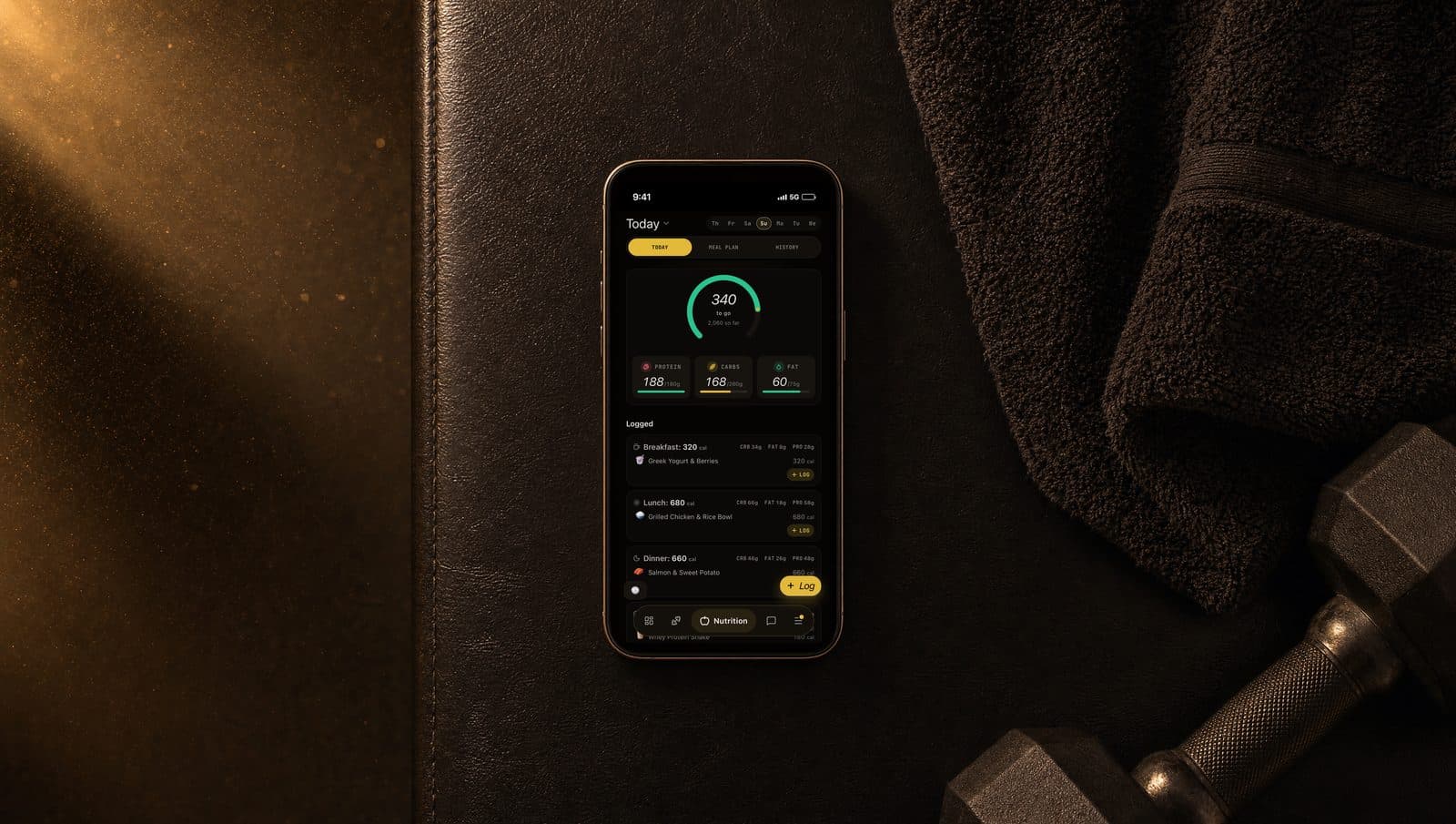
What the app does on Fat Loss mode
If your goal is set to Fat Loss in your Profile tab:
- Calorie target = TDEE x 0.80 (20% deficit, ~500 calories below maintenance for most lifters).
- Protein = 2.2 g/kg (~1.0 g/lb) automatically.
- Fat = 25% of calories.
- Carbs = whatever's left.
- Training adjusts: slightly less volume than a building phase, same intensity, same focus on compound lifts.
- Cardio recommendation: light/moderate steady-state, plenty of walking.
The Meal Plan tab generates around these targets. The coach can adjust if you have specific requests (e.g., higher protein, more carbs around workouts).
What to do next
Calculate your maintenance. (Profile → look at your auto-calculated target.)
Subtract 400 calories. That's your new daily target.
Set your protein at 1.0 g per pound. Hit it every day.
Don't change anything else for 4 weeks. Track weekly bodyweight average and your major lifts.
In 4 weeks, you should be 2 to 4 pounds lighter on the scale and lifting roughly the same. If both are true, you're cutting correctly. Continue.